Thursday, 8 December 2011

Wind? What Wind?

I'll admit to being a bit nervous about today's field work. After a chat with a few old hands we decided to go with it, the forecast 50+mph gusts were what was worrying me, combined with some torrential showers too - not much fun!

Luckily I managed to get the VP out of the wind - luck more than planning I think as the wind switched several directions after I hatched my cunning plan to avoid sitting in it all day, however it was still pretty windy!

There was still some bird activity despite the wind levels - good activity too, mostly low to the ground! It was difficult to judge just how much activity there was compared to normal as I was at a different location to my past two visits to this site. Highlights included close up views of an adult male Peregrine hunting Wood Pigeon - almost making a kill, adult male and ring-tail Hen Harriers, cream-crown Marsh Harrier and juvenile (probably male) Merlin (phone pics below).


Merlin off my phone


Merlin off my phone

Other interest was provided at "the watering hole" - a small (1 foot by 3 foot) puddle on a farm track next to my VP that attracted 12 Greenfinch, 5 Chaffinch, 1 Great Tit, 1 Blue Tit, 5 Redwing, 2 Song Thrush, 10+ Blackbird but most interesting of all, 2 Lesser Redpoll and a Green Woodpecker! (phone pic below - this is really NOT a place you'd expect to find a Green Woody!!!). Luckily the rain held off until 5 minutes after we'd finished the survey, it came down proper hard so I was glad I was back in the landy and warm and dry! We even managed not to get crushed by any articulated trucks getting blown over in the wind! All in all another good day.


Green Woodpecker off my phone

Wednesday, 7 December 2011

Pintail Garden Tick!

I worked at home today, the weather was appalling for the majority of the day but as I looked out of the window nearing dusk I was pleased to note a huge flock of ducks, getting on for 500 birds, mainly Wigeon and Teal and the odd Mallard but mixed in with them was getting on for a dozen or so Pintail - a new garden tick!

They flew in the direction of Skipwith Common from North Duffield and appeared to go down there - but not sure where given how dry it is on the Common at the moment! Presumably there had been something going on in the LDV that flushed the lot of them! If only there was some water down there I might have got some diving ducks in with them! Though it does give me hope for the winter...


Pintail © Mark and Jen Rowlands 2009

Tuesday, 6 December 2011

Allen's Gallinule and it's still alive too....

Another one in Spain - well Fuerteventura today and this one is alive, as can be seen from the great pictures taken by David Perez below (more on Rare Birds Spain). This record follows hot on the heels of a not-so-alive bird found at Palma Airport, Mallorca on 1st December. Maybe there are more out there a bit closer to home....


Allen's Gallinule Fuerteventura © David Perez 2011


Allen's Gallinule Fuerteventura © David Perez 2011

Monday, 5 December 2011

A brighter future for Europe’s rarest migratory songbird

An interesting article from Birdlife International on Friday, reproduced below...

Aquatic Warbler, the rarest and the only globally threatened passerine bird in mainland Europe, is facing a brighter future thanks to six years of intensive work within a LIFE project (part financed by the European Commission), coordinated by OTOP (BirdLife in Poland). Swarovski Optik, Cemex Poland and the RSPB (BirdLife in the UK) kindly agreed to co-finance the other part of the €5 million project.


Aquatic Warbler © Andrzej Kośmicki

“Aquatic Warbler belongs to a very special habitat characterised by peatlands fed by groundwater, called ‘fen mires’. Protecting this bird by restoring its habitat means at the same time to improve the conservation for other rare species that also live in fen mires”, explains Lars Lachmann, the project coordinator working at the same time for OTOP and for the RSPB, also partner in the project.

In the last century, all but a very few fen mires have been drained for agriculture or peat extraction, causing a catastrophic decline in Aquatic Warbler populations, and led to classify them as globally threatened.

A quarter of the global population has survived in Eastern Poland, and a small and isolated group of Aquatic Warbler has found refuge along the Polish-German border.

But today, the vegetation on the few remaining fen mires is changing, and the elements composing the bird habitats are disappearing, and with them, Aquatic Warbler and several breeding waders like Black-tailed Godwit, Common Redshank and Northern Lapwing. Even the establishment of National Parks, has not been able to invert this tendency.

The objective of the project led by OTOP has been to develop a landscape-scale solution for the restoration and the sustainable management of peatlands (fen mires). On the pilotsites, OTOP introduced a prototype mowing machine that does not destroy the delicate peat soil and vegetation. More than 30 of these machines now maintain 15,000 ha of Aquatic Warbler habitat in Poland and this successful technique has already been exported to Germany and Belarus.

OTOP has also implemented suitable agri-environment schemes, paying farmers for Aquatic Warbler friendly management, rehabilitating three national reserves, and supporting the idea that National Parks should lease out their lands needing active management to farmers using the new machines.

Currently, OTOP and its partners are setting up a system to convert the large amounts of low-quality hay harvested on those lands into carbon-neutral biomass briquettes and pellets, permitting to protect the climate, to finance habitat restoration and management for Aquatic Warbler, and at the same time to create local green activities and employments.

“We are very pleased to see the return of large numbers of waders, including Jack Snipe and Wood Sandpiper not seen in Poland for over 10 years, but the key success of this LIFE Project is of course that Aquatic Warbler is readily returning to the areas we have restored for it.” welcomed Lars Lachmann.

The €5 million project has been implemented with funds from the EU LIFE Nature Programme. Additional co-financing was provided by the RSPB, Swarovski Optik and Cemex Poland.

Sunday, 4 December 2011

Skipwith Common

Went for a cold walk round Skipwith Common this morning with Tophill and Whitburns finest Rich and Ade (with Jenny, Caroline and Lisa enjoying a birding trip in the freezing weather).

It was amazingly dry, the driest I've seen the place and the majority of the walk was silent of bird calls - last weeks Wigeon were not in evidence at all until a couple of small flocks flew in as we were leaving.

Most bird activity seemed to centre on a mixed tit flock that was roving around the reserve with blue, great, coal and long-tailed tit making up the majority of the flock with the odd goldcrest and treecreeper in with them. There was a few Chaffinch, Goldfinch and a single Meadow Pipit flying around and a couple of Great Spotted Woodpecker gave tantilising views as they moved through the trees. At least one Kestrel was hunting the site.

Rich let me take some pictures with his camera which i'll stick up when I get them...

Saturday, 3 December 2011

AMUR FALCON on the Azores!!!

Just looking through Netfugl this afternoon when I noticed Amur Falcon reported on the Azores on Wednesday!! What a record!!! The pictures, one reproduced below are labelled Red-footed Falcon but the bird is definitely Amur and on looking into the record represents the first for the Azores and is a phenomenal record too!


© Justin Hart, UK from Birding Azores

Amur Falcon, Falco amurensis, also known as Eastern Red-footed Falcon breeds in East Asia, eastern Siberia from Transbaikalia eastwards through Amurland to Ussuriland, south to Mongolia and Manchuria (it is also known as Manchurian 'Red-footed' Falcon) to North Korea and eastern China.

Amur Falcon is a long-distance migrant, the entire population migrates 11,000 km southwest to winter in sub-Saharan Africa taking a route from their breeding grounds, south through India, across the Indian Ocean making landfall in East Africa - I remember seeing these migrants in Kenya back in 1997/98 at Nakuru National Park. The majority head down to between Malawi and South Africa.

There has been a few records in Europe in recent years, the most memorable one (or worst memorable one depending on your point of view) was the first for the UK that spent several weeks at Tophill Low Nature Reserve in East Yorkshire a few years back, unfortunately I'd seen 5+ Red-footed Falcons that year so didn't bother going to look for another one, only when the bird had departed did review of the photos show that the bird was indeed an Amur! Evidently the bird had moulted some key ID features in during the time of its stay! Never mind...

For a bird to hit the Azores it raises some real questions. Did it come (undetected) westwards through Europe and the across to the Azores, did it hit Africa and get caught in some storms that sent it across the continent, or did it do a total flip and go across north America? All of the above seem fairly impossible to get your head around!!! Take a look at a flat map of the world and look at its breeding grounds, its wintering grounds, its passage route and then look at the Azores!!!

Amur Falcon on the Azores, a really remarkable record!!!

Friday, 2 December 2011

NEW LDV Website.

Back in February I wrote a few posts about ringing recoveries in the Lower Derwent Valley (LDV), some really interesting ones too.

Good news: there are some more interesting recoveries, however better news is that the LDV has a new ringing blog: here, there is also a direct link on my blog list on the right of this page, why not follow the blog and keep up to date with all of the ringing information coming out of this fantastic reserve.


WIGEON: LDV BLOG

The following is sample of some recent ringing recoveries/resightings detailed on the blog:

Redshank (DB88181), ringed as a 6 on 29/03/03 on Aughton Ings, recovered on 19/10/10 at the Bay of Morlaix, France (dead).

Sedge Warbler (X437129), ringed as a 3J on 21/08/09 at Wheldrake Ings, recovered as a 4 on 26/08/10 in Paris, France.

Sedge Warbler (L751812), ringed as a 4M on 12/05/11 at Wheldrake Ings, re-trapped on 22/07/2011 and then controlled on 10/08/11 in Paris, France.

Teal (EL49846), ringed as a 4F on 12/11/07 on Skipwith Common, recovered on 27/08/09 in Finland (shot).

Wigeon (FA51531), ringed as a 3M on 04/12/04 at North Duffield, recovered on 01/01/11 near Long Sutton, Somerset (shot).

Wigeon (FH10123), ringed as a 3 on 23/10/07 at North Duffield, recovered on 01/01/10 in Solotcha, Russia (shot).

Whooper Swan (W09345), ringed as a 3M on 16/12/05 at North Duffield, sighted on 02/04/09 in Iceland (identified by darvic).

Whooper Swan (W24873), ringed as a 3 on 30/11/08 at North Duffield, sighted on 02/04/09 in Iceland (identified by darvic).

Wigeon (FP68613) ringed as a 4M at North Duffield on 11/11/07, recovered 07/05/11 in Russia (shot).

Whooper Swan (W24868), ringed as a 4 on 30/11/08 at North Duffield, recovered on 16/06/11 in Iceland (dead on beach).

Wigeon (FP65520), ringed as a 3M on 14/12/03 at North Duffield, recovered on 09/05/11 in Russia (shot).

Wigeon (FP93603), ringed as a 4M on 25/10/05 at North Duffield, recovered on 23/04/11 in Russia (shot).


Teal: LDV BLOG

Wednesday, 30 November 2011

Rough-legged Buzzard: Work Tick!!

A couple of weeks back I visited a new site and had an amazing day - see here!

Today I managed to get back over there again and had yet another cracking day...

We arrived at the site around 10.30 and by 11 I was getting dropped off at my vantage point, where I was to spend the next 5 hours. As we were approaching the location we noticed a large bird hanging face on in the wind low directly over my vantage point. It didn't look right for the expected species based on my previous visit, marsh harrier, hen harrier, common buzzard... as we neared it the bird turned and showed it was very pale, we raced up in the landy, jumped out with our optics and were straight on it, a cracking juvenile Rough-legged Buzzard! The bird showed well as it gradually drifted west, I tried grabbing a couple of shots as it flew away (below - off my phone)


Rough-leg - Honest! (off phone)


Rough-leg - Honest! (off phone)

The bird showed well for the next three hours as it foraged around the site, here's a slightly better picture of a Rough-legged buzzard - taken last year © Renton Charman 2010. Rough-legged Buzzard was a 'work tick' for me which was really cool, and my first one of the winter and follows hot on the heals of last weeks self-found Rustic Bunting! I like my job!!!


Rough-legged Buzzard © Renton Charman 2010

Throughout the day harriers were again numerous, less Marsh Harrier (c4/5 birds) but more Hen Harriers (c6+ birds) including adult males and females and ring-tail male and females - again these birds gave great views as they hunted and fought with each other! A pair of Peregrine provided a bit of interest for an hour or so as they bombed around trying to catch one of the many Wood Pigeon that were about. Common raptors included a lot of Kestrel, Sparrowhawk and Common Buzzard.

There was plenty of other birds around, the other highlight were singles of Pale-bellied Brent Goose, Pink-footed Goose and Tundra Bean Goose (phone pic below - thanks Russ!) and several flocks of Whooper Swan.


Tundra Bean Goose (mobile shot)

Tuesday, 29 November 2011

3 Months In Peru!

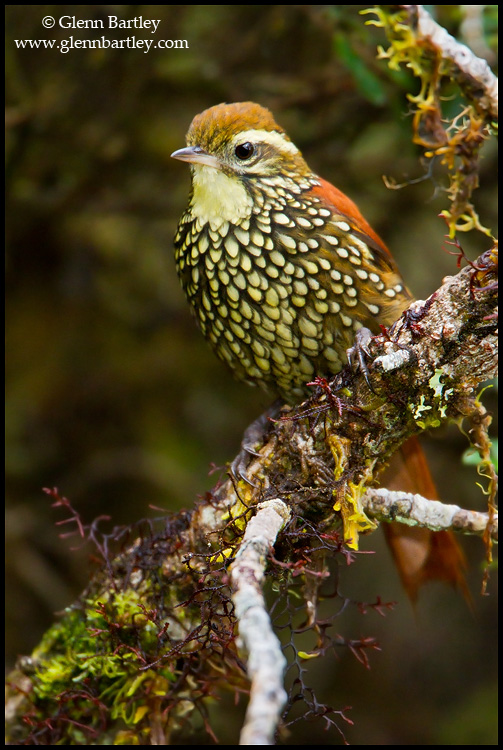
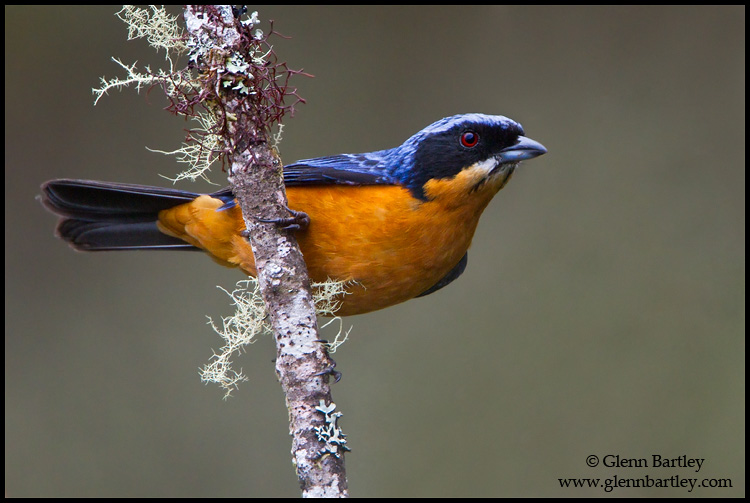
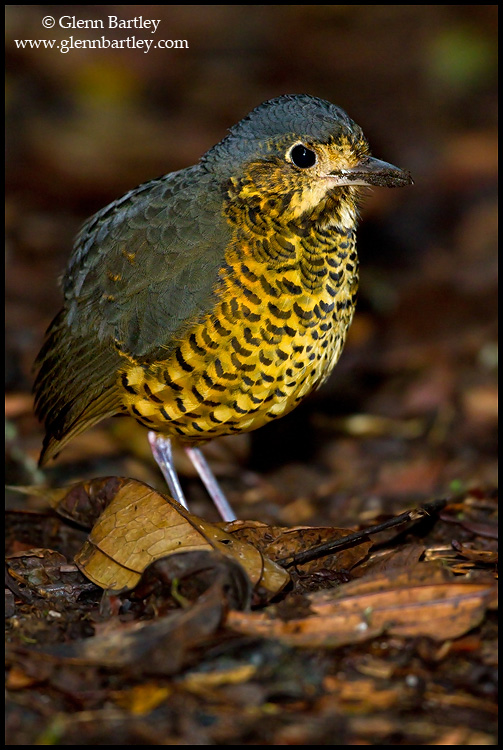
One of the best nature photographers I've ever had the pleasure to meet and see at work, Glenn Bartley has just returned from a 3 month photography expedition in Peru. As expected Glenns trip has resulted in a series of breathtaking photographs, these shots are so inspiring that they make me want to buy a camera just so that I can go on a photography trip with him!!! The following is from his blog... (images © Glenn Bartley 2011)

3 Months in Peru: A Bird Photography Expedition

On the first of September I traveled from my home in Victoria, BC to Lima Peru for a 3 month bird photography expedition. My plan was to travel around the country in search of as many of the most beautiful and endemic birds that I could find.

Why Peru? The answer is simple. Peru is a country that is perhaps unsurpassed in terms of “quality” birds. While Columbia boasts a higher total number of species it is tough to beat Peru’s endemic birds like the Marvelous Spatuletail, Long-whiskered Owlet, Royal Sunangel and about 120 other birds that are found nowhere else on Earth except within the border of Peru.

My search for these birds took me from sea level to 4850m above sea level (ASL). From deserts, to lowland rainforests. From cloud forests to high elevation grasslands. And down many a bumpy road… I slept in towns where I swear no tourists had ever been. I slept in the back of my truck for two of the coldest wettest nights I can remember. I slept wherever I had to in order to be able to have a reasonable chance at photographing these birds. To me…it was all worth it… This is truly what I live for…

Cusco and Manu National Park

After a quick stopover in Lima I took an internal flight to the lovely city of Cusco. Cusco is a city full of culture and history and it makes a great base to visit several local ruins and cultural sites. Nearby there is a high elevation lake called Lago Huacarpay. It was here where I would begin my search for endemic birds.

Those of you that know me know that I love hummingbirds. One of the really special ones in Peru is called the Bearded Mountaineer. It is endemic to Peru and found only in a small area in the southeast. Huacarpay is definitely the best place to see it and it was a great start to the trip to find this beauty feeding on some Nicotina flowers near the lake. In addition to the Mountaineer, Lago Huacarpay produced a beautiful White-tufted Grebe and the strange looking Plumbeous Rail.


BEARDED MOUNTAINEER


WHITE-TUFTED GREBE


PLUMBEOUS RAIL

Flipping through the field guide to the birds of Peru there was another hummingbird from this region that grabbed my attention. The White-tufted Sunbeam is a real stunner that is also endemic to Peru. I had to travel to the smaller town of Ollantaytambo and then commandeer a taxi for the day to take me up above the tree line (around 3600m ASL) in order to search for this member of the Trochilidae family. The first day I went up the wind was howling and I knew that there was no way I would get any photos. But I found where the birds lived and made a plan for the following morning. Returning up the hill the next day rewarded me with not only the Sunbeam but also another endemic – the Creamy-crested Spinetail.


WHITE-TUFTED SUNBEAM


CREAMY-CRESTED SPINETAIL

With these targets photographed it was time to start making my way into the jungle. I really wanted to spend some quality time in Manu National Park. After all, it is the most biologically diverse place on the planet! Imagine a single park with over 1000 species of birds. It is enough to make your head spin! I made a plan to spend the next 3 weeks in Manu and began to prepare for what was sure to be an amazing adventure.

What makes Manu National Park so diverse is the fact that the park covers elevations from approximately 3500m all the way down to sea level in the Amazonian lowlands. This kind of altitudinal gradient creates all kind of different habitats for plants, animals, insects and of course birds to thrive in. Getting the most out of Manu means spending time at various elevations because many of the birds have very specific habitat requirements.

Driving in to the park from Cusco was incredible. The windy road took me up and over a pass of about 4000m ASL and then began to descend toward the park entrance. Before long the grasslands faded from view and gave way to cloud-forest. Trees became larger and were covered with moss and bromeliads. Clouds rolled in from the lowlands below hiding much of what lay ahead beneath a mysterious veil.

After a lengthy drive I arrived at my first photo stop at an area around 1500m. I would spend the next 3 days searching this area for as many birds as I could find. This area turned out to be great for mixed species flocks and I saw some really stunning birds. Photographing them however was often a challenge. But over the three days I did have some really rewarding encounters. Perhaps most memorable was a visit to a very active lek for Andean Cock of the Rocks (Peru’s national bird).


ANDEAN COCK OF THE ROCK


CRESTED QUETZAL


BLUE-NAPED CHLOROPHONIA


RUFESCENT SCREECH OWL

Three days came and went and it was soon time for me to continue on down the road deeper in to the park. I hitchhiked down the road to the next town and then took a moto-taxi to the town of Atalaya. From here I hired a boat to take me on to my next destination located at about 500m ASL where I would spend the next 5 days. One of my main targets at this elevation was the feisty little Rufous-crested Coquette and I was very pleased to get some nice images of this little guy. My five days at this location were full of exhilarating encounters with birds like the Band-tailed Manakin, Gould’s Jewelfront, Blue-crowned Trogon and many, many more! One of the coolest birds I found was the Short-tailed Pygmy-Tyrant. This bird is the smallest passerine in the world and let me tell you – he is tiny! The field guide has a very accurate description – “a tiny ball of feathers that is scarcely larger than a bee”. What a cute bird!


RUFOUS-CRESTED COQUETTE


BAND-TAILED MANAKIN


GOULD’S JEWELFRONT


BLUE-CROWNED TROGON


SHORT-TAILED PYGMY TYRANT

At this point I had reached the end of the road…literally. All travel deeper in to the park would require a boat. I managed to join a tour group to move on down the river – WAY down the river. We took the boat several hundred kilometers into the jungle and into the Manu National Park reserved zone. This is an area that is strictly protected from logging and hunting and is truly pristine. Some of the highlights for me in the reserved zone were the Agami Heron, Horned Screamer, Red and Green Macaw and a family of Giant Otters!


AGAMI HERON


HORNED SCREAMER


RED AND GREEN MACAW


GIANT RIVER OTTER

The tour group dropped me off at their final stop – a lodge based at 300m ASL. I would spend the next week here trying to photograph some of the really difficult lowland birds. Bird photography at this elevation can be really difficult. To start with, there is almost never any light to work with. Competition for the suns rays in the rainforest is fierce and most light is intercepted before it reaches the forest floor. This makes for hopelessly slow shutter speeds and high ISO’s. Not ideal! The other challenge is that while species diversity is incredibly high – the actual number of individual birds is quite low. Birds here often have huge territories and roam around in mixed species flocks throughout the day. Sometimes you have to be lucky to run in to the flock. Otherwise you may not see much at all. Even if you do find a good flock they are often up in the canopy or moving to quick to get decent shots of. Like I said…photography in the lowlands is very difficult!

That week I spent hiking around the trails for between 8-12 hours a day. Sometimes with very long gaps in the action. I was focusing on trying to photograph Antbirds and did manage to get a few. Fortunately for me I found a huge Army Ant swarm for a few days and this attracted a lot of birds that were looking for an easy meal. You see, when the army ants raid they flow out into the forest in rivers of ants. There can be hundreds of thousands of them and they are all hungry! They overwhelm anything that gets in their way, tear them to bits and carry the food back to the queen. Needless to say the other insects on the forest floor want nothing to do with the ants and try to get out of the way as fast as they can. The Antbirds and Woodcreepers know this and wait patiently above the ant swarm. When a cricket or cockroach moves from its hiding place to escape the birds pounce. An easy meal!

When I found the ant swarm I knew that this would be where I would be spending quite a bit of time. I think I stood in that swarm for something like 10 hours (over two days) trying to get images of Antbirds. I was rewarded with a few keepers…and quite a few ant bites too!


WHITE-THROATED ANTBIRD


BLACK-FACED ANTBIRD


BUFF-THROATED WOODCREEPER

I left the lowlands behind me and started the long journey back to Cusco. Before returning to civilization though I wanted to make one more stop. I felt like I had missed out on the birds in the higher elevations of the park so I decided to stop in at a lodge at about 2800m ASL to try for a few cloud-forest specialties.

The cloud-forests are home to a dazzling variety of beautiful tanagers. Birds like the Scarlet-bellied and Hooded Mountain Tanagers, Grass-green Tanager and Golden-collared Tanager to name just a few. These cloud forests of the Neotropical Andes are probably my favourite places on earth. So, for me, these few days were pure joy.


HOODED MOUNTAIN-TANAGER


GRASS-GREEN TANAGER


GOLDEN-COLLARED TANAGER

I traveled back the rest of the way to Cusco for a much needed break from bird photography for a few days. It was the perfect time to take a side trip to one of the wonders of the world – Machu Picchu.

Machu Picchu

The trip to Machu Picchu involves traveling to Ollantaytambo and then onwards by train to Aguas Calientes. From here it is a short bus ride away to these most incredible Inca ruins. What a spectacular place to spend a day!


MACHU PICCHU

The Central Highlands

Visiting Machu Picchu was a nice break from bird photography. But after a few days off I was ready to get back to work. I flew back to Lima to meet up with a friend of mine from Ecuador. We rented a 4×4 truck and set off for the Central Highlands.

Our first destination was an area of high elevation grasslands and bogs called Marcapomacocha. When I say they were high I mean it. We were birding at over 4800m ASL which was the highest I have ever been. The thin air, strong sun and cool temperatures were all forgotten though when we spotted the first of our main targets – the critically endangered White-bellied Cinclodes.


WHITE-BELLIED CINCLODES

Our next target proved to be more difficult to find and was much more difficult to photograph. The Diademed Sandpiper-Plover is one of the most beautiful shorebirds in the world and certainly one of the toughest to track down. Living only in high elevation bogs above 4500m you dont just stumble upon them. It was a great reward for all of the huffing and puffing up there to come away with some nice images of this species.


DIADEMED SANDPIPER PLOVER

Over the next few days we worked away on some of the other high elevation species such as the Black-breasted Hillstar, Andean Goose, Gray-breasted Seedsnipe and Junin Canastero.


BLACK-BREASTED HILLSTAR

From Marcapomacocha we continued on towards the town of Huanuco. This was our base from which we would visit the legendary Bosque Unchog. Bosque Unchog is a beautiful area of Elfin Forest where some really special and endemic birds can be found. It is decidedly off the beaten path though. No facilities exist and it is a rough road to get there. We had to spend two VERY cold nights sleeping in the back of the truck in order to bird this area. But the birds made it all worth while. Although I missed getting photos of the most spectacular bird at Bosque Unchog (the Golden-backed Mountain Tanager) we came away with shots of many other great birds. My favourites had to be the Yellow-scarfed Tanager, Bay-vented Cotinga, Pearled Treerunner, Streaked Tuftedcheek and Chestnut-bellied Mountain Tanager.


YELLOW-SCARFED TANAGER


BAY-VENTED COTINGA


PEARLED TREERUNNER


CHESTNUT-BELLIED MOUNTAIN TANAGER

The North

After Bosque Unchog it was back down to Lima and then on northwards. Most people probably don’t realize this – but the Peruvian coast is a complete desert. Traveling back to Lima and then 800km up the coast was a long, long drive. But it was necessary in order to reach the next set of endemic birds.

Eventually we arrived at our first destination near the town of La Florida. This region is the only place to find what is perhaps the most extravagant hummingbird of them all – the Marvelous Spatuletail. I really wanted to get some solid images of this species and after two days of hard work I was able to get the shot I had dreamed of.


MARVELOUS SPATULETAIL

Not far from where the Spatuletail lives there is a new lodge that is dedicated to birdwatchers. It is a fantastic place to spend a few days and some really special species can be found in the nearby forests. After 10 weeks of grinding it out in the field let me assure you that it was not hard to convince me to stay here for a few nights!

On our second day at the lodge I had one of those days in the field that I will NEVER forget. The day started off with an unbelievable opportunity to photograph an Undulated Antpitta. Later on I had a phenomenal chance to photograph the Royal Sunangel. I was feeling pretty good about the day at this point and decided to try my luck at some owling that night. My target was the Long-whiskered Owlet and to be honest I did not think I had a chance to see it let alone photograph it.


ROYAL SUNANGEL


UNDULATED ANTPITTA

The Long-whiskered Owlet is an enigma. The bird was only discovered in 1976 and was then not seen again until 2002! Even to this day very few people have had good looks at it.

At just 5 inches this bird is the smallest species of Owl in the world. It is so unique that upon discovery ornithologists immediately put it in to its own genus “Xenoglaux” which means “strange owl”.

That evening I trekked down a muddy trail into the elfin cloud forest and I waited patiently to hopefully hear the birds call. Before long, to my delight, I heard what I believed to be an Owlet calling in the distance. I began to use the birds call to try to lure him in towards me.

I’m sure you can all imagine the adrenaline and excitement that I was feeling when I realized that it was working and the bird was coming closer. I stood motionless. I didn’t dare fiddle with my equipment. I didn’t dare check to see what insects were crawling up my leg. Heck…I didn’t dare breathe!!

And then…I saw a flash of movement in front of me. The moon was nearly full and there was enough light to just make out the movement. I shone my flashlight in the direction of the fluttering object and there he was not even 20 feet away on an open branch staring right at me – The Owlet!

As I walked back up the hill after photographing this incredible bird I could hardly believe what had just happened. I think that there are moments in our lives as photographers that I think we will never forget. For me this was most definitely one of them.


LONG-WHISKERED OWLET

3 months in Peru came and went in a flash. What a wonderful trip and what a great country for birds. I will definitely be returning soon!

If you would like to see more photos from my trip - CLICK HERE

If you think that a bird photography adventure to Peru might interest you make sure to EMAIL ME to sign up for the wish list for my workshops that will begin in the fall of 2013.

Friday, 25 November 2011

RUSTIC BUNTING SURPRISE!

I got a bit of an unexpected, but rather nice surprise today.

The dilemma I have doing my job is: "What happens if/when I/another surveyor I work with finds a rare/scarce bird on one of our windfarm sites?" Unfortunately, due to many of my sites been highly confidential in their nature (because for some reason windfarms are not particularly popular) releasing news of where a rarity has been found would potentially give away a location of a proposed windfarm, hence why my work related posts are rather vague when it comes to locations. All records I get find their way back to the county recorder in one way or another eventually. Many of our sites are on private land with no public access.

Past rarities/scarcities I/other surveyors have had on my sites that spring to mind have included Blyth's Pipit, Richard's Pipit, Bluethroat, Red-breasted Flycatcher, Marsh Warbler, Yellow-browed Warbler, Pallas’s Warbler, Barred Warbler, Great Grey Shrike, Red-backed Shrike, Honey Buzzard, Wryneck, Kentish Plover, Caspian Tern, Grey Phalarope, Waxwing, and a whole host of rare breeding species such as Montagu’s Harrier, Quail etc etc…

Today I was doing a walkover survey for wintering birds, it was a strange day with areas totally devoid of birds but with other areas totally rammed. Several thousand Golden Plover and Lapwing were the main feature of the day, along with several hundred geese. Totals included approximately 600+ Brents, 60 Barnacle, 26 Pink-footed and best of all 2 Tundra Bean Geese, only the second time I’ve had this species on a survey. I managed to sneak up within 40m of the Beans using a small hedge as cover so got some nice views.

Passerines were fairly thin on the ground, a few thrushes appeared to be moving along the hedgerows, mainly Redwing and Fieldfare but with good numbers of Blackbird and 2 Mistle Thrush too. A few finches were moving around, Goldfinch, Linnet and Chaffinch been the main feature however Lesser Redpoll was also noted, as too was a single Lapland Bunting.

After sneaking up on the Bean Geese I continued along the hedge where I flushed a bird, a bunting. It circled low and landed behind me on the top of a low hedge, I got my bins up onto it, the bird was side on and the first thing that caught my attention was the browny/orangy flank markings, I looked up a bit further and was greeted by a very distinct face pattern looking back at me. I was 6 feet from a 1st winter type RUSTIC BUNTING! No sooner had the fact clicked in my brain it was off it looped back round and dropped over the ridge. I’m having this I thought so I raced after where it had gone down only to be greeted by a water filed ditch that was pretty much 10 foot vertically deep with a good 10 foot wide bit of water. NO!!! I scanned as far as I could see in both directions but there was simply no way I was getting across the ditch! Pure frustration! A Yellowhammer and several Skylark flew over from the other side of the ditch but there was no sign of the desired Rustic Bunting.

After an hour or so of trying to get to the area where the bird went down I eventually found a way across, though by this time the wind was really picking up and a storm was rapidly approaching, if the bird was still about there was no chance it was going to show so unfortunately I had to give up on relocating it. I was really gutted that it managed to get away.

Unfortunately I didn’t manage to get any photos due to the brevity of the views (and not having a camera to hand) but below is a picture of the Rustic Bunting I found last autumn at Flambrough – it looked pretty similar to this bird as you’d expect!


Rustic Bunting (Phonescoped) October 2010.

Now, as stated at the beginning of this post I can’t say where the bird was, but rest assured I’ll be submitting a record to the relevant county recorder in due course.