Sunday, 18 March 2012

Some Good Local Birding This Weekend

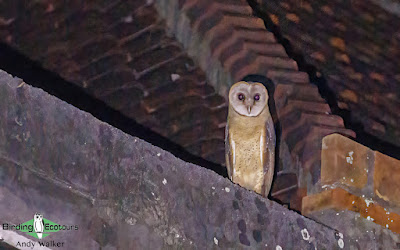
On Saturday I had a quick hour or so over at North Duffield Carrs which was very enjoyable. There was at least 4 Short-eared Owls performing across the reserve, generally fairly distant from the hide but still nice to see (I thought there was 5 but couldn't confirm it). A bit of scanning resulted in a very very distant Barn Owl but then a quick look below the hide resulted in great views of one sat right outside the window! Unfortunately the angle didn't allow for photos. I also had another on the way home. A raptor was picked out sat on a fencepost at the back of the reserve, once in the scope it was clear it was a male Merlin. Buzzard, Kestrel and Sparrowhawk were all noted.

A typical range of waders were noted, with lots of territorial displaying (Lapwing and Curlew) with 2 vocal Redshank also seen.

This morning I had an enjoyable local dog walk with 2 male Great Spotted Woodpeckers chasing each other around.

Went back down to North Duffield Carrs this afternoon and got 5 Short-eared Owls. 2 of the birds were really close to the hide, 2 were mid distance and 1 was way off, though they all ranged about a fair bit. I managed a couple of record shots on my phone (below). Again the distant Barn Owl was observed. There appeared to be a few more waders present today with several snipe seen - all flushed by the hunting owls, with 3/4 Redshank and a number of Curlew and Lapwing present. Didn't see the Merlin around today but I bet it was out there somewhere!


Short-eared Owl (NDC)


Short-eared Owl (NDC)


Short-eared Owl (NDC)

Saturday, 17 March 2012

White-winger Pictures: York

Got a few pictures through from Chris Gomersall this week of some of the Iceland and Glaucous Gulls seen at Poppleton last week - see here.


Iceland Gull


Iceland Gull


Iceland Gull


Glaucous Gull


Iceland and Glaucous Gull

Friday, 16 March 2012

New Local Birding Area

Last week I had a chat with Tim about an area within the York Recording Area that he'd seen on google earth that looked interesting so this afternoon after finishing work I dropped in to see what it looked like on the ground.

It was actually quite interesting, 34+ Greylag Goose, 10 Wigeon, 1 Curlew, 3 Lapwing, 1 Barn Owl, 3 Kestrel and 1 Buzzard. There was plenty of decent farmland birds too, with loads of Tree Sparrow, Yellowhammer, Reed Bunting and Linnet.

I think the site has potential for some interesting birds over the coming months so will go back to check it out.

A quick stop at Bubwith Bridge resulted in a Short-eared Owl and a flock of c.40 swans - a mix of Mute and Whoopers Swans but difficult to get an accurate count as they were distant and I only had binoculars.

Wednesday, 14 March 2012

Work Sucks!

What a rubbish day! The last two days I've been up in Glasgow which was good fun - well the 1st class train rides were!

Today I was out surveying and it was total rubbish! I'm fed up of watching Short-eared Owls, had another 2 showy birds today (new for the site), I hate it when they give such awesome views! Merlin too, big female one putting the fear of god into hundreds of smaller birds before sitting on a wall for a while (another site first). A flock of 5, and another pair of Goosander were equally rubbish (another site first). I tried to avoid looking at the 1000+ Golden Plover, 100+ Curlew and 50+ Lapwing. Calling Crossbill and Siskin were totally ignored too. Work sucks doesn't it!

Lost count of how many Short-eared Owls I've seen this winter, will work it out a bit later....

Saturday, 10 March 2012

Wheldrake Gull Roost: More Ice!

Happy with yesterdays haul of Iceland Gulls (pictures coming soon I promise!) I decided to nip down to visit the Wheldrake Gull roost this afternoon to see what was around, went via Escrick where I had a Green Woodpecker (York area year tick).

I met up with Tim Jones at the metal bridge, he'd been doing some local year-listing and we decided to meet up for the last hour or so of light at Wheldrake. We headed down to Swantail Hide (via a brief stop off at Tower Hide). It was bright and sunny but fairly breezy at times. A scan about the meadows resulted in 14 Black-tailed Godwit (york area year tick), 60 + Curlew, a dozen plus of Ruff and Dunlin, the former getting into some interesting plumages, and an increased number of Oystercatcher and Redshank from my previous visit last weekend.

It didn't take long for the gulls to start coming in, and we were soon on an Adult Iceland Gull, picked up by resident gull expert Ollie Murrs and Chris Gomersall (well Chris really) as they were walking to Swantail to meet up with me and Tim. The bird dropped onto the water allowing a quick record shot on my phone (below). This bird didn't hang around too much though and we watched it fly off south.


Iceland Gull (Phone-scoped in fairly early)

The rest of the gulls started making there way in and we recorded 2 1st winter and 1 2nd winter Iceland Gulls (record shot of one of the later birds but light gone by this point). These birds were interesting, the second winter bird was interesting very dark and definitely not one of the two 2nd winter birds that Russ and I had yesterday, also interesting was that the two 1st winter birds today looked largely similar - i.e. the last 1st winter bird we saw yesterday was not on of the birds we saw this evening.


Iceland Gull (Phone-scoped in fading light at distance)

Adding more interest was that Jono was over at Poppleton also this evening where he had a 3rd winter bird (not sure there has been a 3rd winter Iceland Gull recorded there so far?), he also had 1 or 2 adult and 1 2nd winter Iceland Gulls - need to firm up the times with him to see potential overlaps etc but, based on the obvious so far:

Iceland Gulls 9th and 10th March York Area:

Juvenile/1st winter: 3
2nd winter: 3
3rd winter: 1
Adult 2


At least 9 birds but there could very easily be more. I will update this after I speak with Jono.

The walk back to the car resulted in great views of 2 Barn Owl, 2 Tawny Owl and a few Snipe.

Friday, 9 March 2012

Mums Gone to Iceland!

Spent the morning doing a raptor survey which was good fun, apart from the weather deteriorating as we went into the afternoon. Plenty of Red Kites were found which was good to be able to observe at close range with the usual common raptors present too (Buzzard, Kestrel and Sparrowhawk).

The drive back to York provided the opportunity to call in to Poppleton to check if there was any 'white-winged' gulls present, the area has held several Iceland and Glaucous gulls over the winter but I've been unable to find the time to visit the site thus far.

Excited about the prospect of some good birds we neared the site, only to find the usual fields totally devoid of birds! Gutted!!! We carried on home but as we were nearing York a small flock of gulls caught our eyes, they were following a plough right by the main road. A quick bit of maneuvering got us to a great viewpoint overlooking the field and in no time at all the action started!

The gull flock consisted of mainly Herring Gull, though there was also a number of Black-headed Gulls present. There was a few Common, Lesser and Great Black-backed Gulls present - but not many really. It didn't take much scanning before we located a very bleached 2nd winter Iceland Gull, followed rapidly by another 2nd winter. A very short while later we found an adult Iceland Gull, followed almost immediately by another adult. Fantastic!


Adult Iceland Gull Chris Gomersall (taken a few weeks back)

These 4 Iceland Gulls generally sat about a bit away from the 'crowd' of gulls however one of the adults did seem to enjoy getting involved in the fracas behind the plough. They were providing excellent views but suddenly everything got up and in amongst the mess of wings Russ picked out a juvenile Iceland Gull in flight which after a bit of a fly-around it too dropped into the field where it showed some subtle features - e.g. it was a fairly pale bird but still had many juvenile feathers on the upperparts and was well barred undertail coverts. This bird didn't really hang around for too long though as the majority of gulls appeared rather flighty at this time but in a short while the 2 adults and 2 2nd winter birds all came back in and continued to show well.

We were aware of a huge flock of large gulls over the tip in the distance and it was apparent that a small proportion of them were coming to the 'usual' fields near Poppleton. We quickly moved location to see if there was any other white-wingers in the area. Unfortunately this flock (containing a much higher percentage of Great Black-backed Gulls with the Herring Gulls) was very tightly packed and they all flew off as we approached! There was no obvious white-wingers in the flock though.


Iceland Gull Photo Chris Gomersall (taken earlier in the winter)

Happy with our haul we decided to get back home but as we were re-passing the ploughed field (this time with far fewer gulls in it) it was immediately obvious there was another Iceland Gull present, it was sat right by the side of the main road! We quickly pulled off the road and it was clear this was a very different juvenile - much darker on the upperparts with a really long primary projection. We only needed our bins for this bird as it was so close but we could see what we presumed to be a distant adult Iceland Gull at the back of the field - if only we'd got our scopes out to double check it!!! Unbeknown to us Chris Gomersall had arrived at the site (out of our view) and was watching the above juvenile Iceland Gull and an adult Glaucous Gull!!! Unfortunately we didn't check it and just assumed it was the Iceland Gull we'd seen earlier!!! We should have known better!!! I think Chris has some photos of the Iceland Gulls and the adult Glaucous Gull from today that I'll post tomorrow.

The above makes me think - How many Iceland/Glaucous Gulls must there be in the area at the minute? The flock we were looking at was a tiny proportion of what was feeding on the tip... Our resident gull expert Ollie also (at the same time we were watching our Iceland gulls) had an Iceland Gull (1st/2nd winter bird) fly through the centre of York! (a bit gutted that I missed an office tick but can't complain really!!)

[Sorry this post was a lot longer than expected! Check back tomorrow for some pictures of today's birds]

Thursday, 8 March 2012

Peregrines and SEOs: Garden strikes again

I worked at home today as I had some reporting to do. A quick glance out the window mid-morning provided a rather nice surprise in the form of an adult male Peregrine cruising over the garden heading towards Skipwith! This is about the 4th/5th time I've recorded Peregrine over the garden in the last year! Other birds noted in/over the garden during the day included Buzzard, Sparrowhawk, a steady passage of Skylark and plenty of finches, Chaffinch seemingly much more abundant today.

Interestingly my first Peregrine garden record was on the 5th March 2011 - almost a year ago to the day! It was also my 50th garden tick!

A late afternoon trip down to the reserve for the last hour of light resulted in good views of 2 Barn and 2 Short-eared Owls, there seemed to be a slight increase in Curlew again too though Lapwings appeared to be present in lower numbers.

Wednesday, 7 March 2012

Office MEGA: Med Gull tick & Shelduck Garden Tick!

Anyone who's been following my blog for a while will know I'm an avid keeper of bird lists for where I spend a lot of time, e.g. garden list, office list, survey list, patch list etc etc... nothing serious, just for a bit of fun...

Last night I added a new bird species to my garden list in the form of a very vocal Shelduck flying over at 2315hrs! This was a strange one as only recently I was thinking I should get one during the day due to the numbers currently present (based on my sightings in the LDV recently and info on the excellent, and highly informative LDV ringing blog). This was very satisfying!

Today I was in the office, thousands of gulls fly over each afternoon from their feeding grounds to the Wheldrake/Humber roosts, many times I've wished I'd got bins with me and today I had a pair which resulted in my 2nd tick in a few hours - this time, amongst a flock of small gulls circling the city at around 4pm was a cracking Mediterranean Gull!! A fantastic office tick! Right over York City Centre!!!


Mediterranean Gull (Richard Hampshire)

UPDATE: Got a message from Christopher, a York birder today (8th March) saying he's just had a Med Gull over the River in York near Lendel Bridge, I wonder if its the same bird as the one I had?

Tuesday, 6 March 2012

Passage waders in the LDV...

This time last year we got a couple of decent local birds drop into the Lower Derwent Valley briefly: Grey Plover which I managed to connect with and Bar-tailed Godwit which I failed to connect with.

I wonder what, if anything the next couple of weeks will bring - it was a lot wetter last year... though I do note that Tophill Low has had its first Avocet record since approximately 2001 today so here's hoping... Hope the local year-listers have got their cars full of fuel...


Avocet Chris Gomersall

Sunday, 4 March 2012

In hand Sparrowhawk

Last weekend an email went out from Paz on the York Bird Club email thing saying he'd found a dead Sparrowhawk on a local walk. A week or so previous I'd found a dead Kestrel which proved a really interesting bird: see here so I quickly email Paz back and asked if I could have it and very kindly he said yes and went to pick it up for me.

On picking up the bird which had been carefully laid out it was clear it was an immaturish female (very brown and rufous colour and large size). I took the bird home and took some measurements and photos and took a more detailed look at it. It had a wing length of 235 mm and weighed 270 g. Not quite sure of cause of death (though head was a bit wobbly), looked to have been dead a day or so I think. The bird is aged as an immature (1st winter) female. The pictures below illustrate some of the finer points of the ageing of the bird.


Saturday, 3 March 2012

GlaucLand Gulls: Local Patch Birding is GREAT!

Had a brief walk down to the Wheldrake gull roost in the beautiful afternoon sun today. First off I picked up a Kingfisher heading along the river which was a great start!

I got to Swantail Hide to observe the gull roost and there was already quite a few gulls loafing/roosting about the area. A quick scan first revealed an cracking adult Iceland Gull followed about 20m away by an even more cracking adult Glaucous Gull (a York area year tick!). Unfortunately I'd forgotten my new (better) blackberry so had to try and get some pics with my old one. I'll admit to putting some absolutely awful pics on my blog over the last couple of years and I'm sure these will rate highly against them!


Iceland Gull (Phone-scoped)


Glaucous Gull (Phone-scoped)

After enjoying really nice views of the above white-winged gulls I had a quick scan around the reserve. There seemed plenty of good birds around today including lots of Golden Plover and Lapwing with a good dose of Curlew, Ruff, Dunlin and my first local Oystercatchers of the year. Waterfowl were typically abundant with Greylag Goose, Canada Goose, Shelduck, Pintail, Wigeon, Teal, Gadwall, Mallard, Shoveler all noted. A Heron stalked the undergrowth and several Cormorants watched the proceedings from their favourite perches over the water while several Water Rail could be heard screaming away in the reedbeds and several flocks of Reed Bunting and Fieldfare flew in to roost.

As if the above wasn't enough 2 Short-eared Owls showed fantastically well right next to the hide, giving great views. Again, unfortunately due to the wrong phone I was unable to get a decent shot, and by now the light was fading. So the effort below was best I could do.


Short-eared Owl (Phone-scoped)

Unfortunately the main gull roost didn't get underway tonight until fairly late 1812ish, by which time it was pretty much dark and the only thing I could pick out was 1 additional adult Iceland Gull amongst the commoner species. Nevermind, you can't complain with adult Iceland and Glaucous Gulls, Kingfisher and Short-eared Owls in a couple of hours on your doorstep!

It was nice to meet Duncan and see Dave again too.

Thursday, 1 March 2012

North Duff Goose Watch

Had a quick hour down at North Duffield this afternoon, highlight was a Bar-headed Goose that flew down the valley with 6 Greylags. (News from those further up the valley was that it was flushed by a couple of Hot Air Balloons from Wheldrake - we were watching these flush the birds in the distance).

Unfortunately the goose didn't land and was lost as it went over the hide. Very distinctive though, even in flight.

Other birds noted on the reserve included Curlew - about 40 odd, several Mute Swan, 1 Canada Goose, 50-60 Greylag Goose, Gadwall, Teal, Wigeon, Mallard, Moorhen, 2 Kestrel and 2 Barn Owl. A Ruff flew straight through towards Bubwith where there was a decent flock of Lapwing present. Several Reed Bunting were noted coming in to roost and the air was full of the song of Skylark


Gadwall (Phonescoped)

Tuesday, 28 February 2012

Drivers of low breeding success in the Lesser Spotted Woodpecker in England: testing hypotheses for the decline

Interesting report on Lesser Spotted Woodpecker in the new issue of Bird Study by Elisabeth C. Charman, Ken W. Smith, Ian A. Dillon, Steve Dodd, Derek J. Gruar, Andrew Cristinacce, Phil V. Grice & Richard D. Gregory. Here is a brief overview of the paper.

Capsule The breeding success of Lesser Spotted Woodpeckers Dendrocopos minor is now lower in England than previously reported and also lower than found in studies elsewhere in Europe.


Lesser Spotted Woodpecker: Thermos

Aims To quantify the breeding success and identify the causes of nest failure. To test the hypotheses that breeding success is related to aspects of food limitation and parental care, and inclement weather during the nesting period, or to interactions with Great Spotted Woodpeckers.

Methods Nests were monitored in three regions of England, recording survival and causes of failure. We measured aspects of food limitation and parental care, rainfall and Great Spotted Woodpecker interactions at nests, to explore whether there was any evidence that these factors were related to breeding success. We compared results to other studies from the UK and continental Europe.

Results Nest survival was 52%. The average number of chicks produced from successful nests was 2.8. Chick-stage daily nest survival was positively related to provisioning rates, indicating that food supply may be limiting. The most common cause of nest failure was presumed starvation of chicks after the disappearance of an adult. Some females ceased visiting nests, leaving provisioning solely to the male. This behaviour has been reported elsewhere in Europe, but in the present study males were unable to compensate fully by increasing their provisioning rates, leading to poor nest survival. Provisioning rates and chick-stage daily nest survival were negatively associated with rainfall. Nest predation by Great Spotted Woodpeckers occurred but was a less frequent cause of failure. Aggressive interactions were recorded between the two woodpecker species but these were unrelated to breeding parameters.

Conclusions Low breeding success is most probably related to food shortages in the breeding period. Simple population modelling using parameters from the present study and from published work shows that if the low productivity that we have observed is replicated throughout Britain, it would be sufficient to account for the observed population decline. However, the possibility that survival rates are also low cannot be ruled out.


Lesser Spotted Woodpecker: Thermos

Sunday, 26 February 2012

TROPICAL MOCKINGBIRD PHOTOS

The first record of Tropical Mockingbird for the Western Palearctic! Presently in Gibraltar, originally thought to be a Northern Mockingbird until better views were obtained. Here is a photo of the bird by Charles Perez. Follow this link for more photos and account of the finding of this MEGA bird from the excellent Rare Bird Spain Website. Keep up the good work guys.


Tropical Mockingbird © Charles Perez

Who said Mallard were boring???

Just catching up with a few of the great blogs that I read and the following, from the Lower Derwent Valley NNR blog caught my eye, its about Mallard...:

[Ring number] GN12614, a Mallard caught and ringed at Wheldrake on 28/06/99 was re-caught today [Saturday 25th 2012] at North Duffield Carrs. That’s nearly 13 years since ringing and makes it at least 14 years old. Interesting that it’s not been re-caught since, so you have to wonder where it’s been since we last saw it. It’s certainly a good age for such a popular quarry species, the longevity record [for Mallard] from the BTO ringing in the UK is 20 years and 5 months.

This is cool, and one of the great things about ringing! Anyone who doesn't know the area Wheldrake is a few Kms north of North Duffield. Where has it been for the last 13 years??? Loads of waterfowl ringing goes on in the LDV so really surprising that its not been recaught prior to now!


Drake Mallard Photo Bert de Tilly

I was at a Wedding up in Pateley Bridge this weekend, a really beautiful location and had a great time. There was plenty of Red Kite about which is always nice to see! A morning walk round the village of Spofforth with Mike Bowman Images was really enjoyable too with lots of Red Kite, singing Yellowhammer, Song Thrush, Blackbird and Dunnock, vocal Great Spotted Woodpecker, several Long-tailed Tit and nest prospecting Jackdaw.

This evening I thought I'd take a quick look at North Duffield Carrs, it was fairly quite but a single Barn Owl and almost 40 Curlew were good. No sign of any more Short-eared Owls unfortunately. There had been a Bar-headed Goose on the reserve in the morning but unfortunately this had gone before I got down there.