Showing posts with label Cyprus Birding Trip Report May 2011. Show all posts

Tuesday, 13 December 2011

NEW Shocking Persecution in UK

Today I've found out about 2 further cases of some appalling bird persecution that have occurred in the UK this year, in a year that has seen numerous cases of persecution hit the headlines, e.g. here.

Firstly: The case of serial egg-collector Matthew Gonshaw (aged 49) of Cherrywood Close, Bow in East London who has extended his infamy as Britain's most imprisoned egg collector. He has been sentenced to yet another jail term, for six months, following conviction for stealing and possessing wild birds' eggs, including those of some of the rarest and most threatened birds in the UK.


Press Association


Watch out for this guy on your local patch - and then phone the police, or maybe some other birders...
Press Association

Gonshaw's home in East London was raided by officers from the Metropolitan Police and RSPB Investigations unit on 2nd June this year. Nearly 700 eggs were found at the premises.

Gonshaw faced 10 charges, including taking five Golden Eagle eggs and 12 Avocet eggs from the wild, and possessing eggs from specially protected species, including seven Golden Eagle eggs, eight Osprey eggs, 12 Avocet eggs, three Peregrine eggs, three Red Kite eggs, and 12 eggs of other specially protected species. The remaining wild birds' eggs were all illegally held but were from species not covered by Schedule 1 of the Wildlife and Countryside Act 1981.


Eggs seized Press Association


More Eggs seized Press Association


Avocet Eggs Press Association

Becky Owen, reviewing lawyer for the Crown Prosecution Service in London, said: "We have worked closely with the RSPB and the Met Police Wildlife Crime Unit to secure this conviction and our hope is it sends out a strong message about the seriousness of these crimes. Matthew Gonshaw's criminal actions caused untold damage to wildlife in the UK. He has plundered nearly 700 eggs, including some from endangered species such as Golden Eagles and Ospreys."

This is his fifth conviction relating to his collection.

In April 2001, he was caught raiding a golden eagle's nest in the outer Hebrides and fined £500. In 2002, he received a three-month sentence for stealing rare British species of eggs, but officers were unable to find his collection. In 2004, he was jailed for four months and fined £5,000 in Scotland for taking eggs and he was jailed again for six months in 2005 after being caught with more than 700 eggs.

I would hope the court has set this guys prison sentence to cover the 6 month breeding season, he obviously likes two things: 1) Collecting birds eggs and 2) Spending time in a cell. A bit of advice for Mr Gonshaw - don't drop the soap.

Secondly: The hunting of wild birds in Malta and Cyprus is widely reported, though little ever seems to happen to anyone caught doing it, despite so called EU protection for our migratory birds. Last year I read about hunters from these countries catching boats to Egypt to hunt birds over there and today I found out about Maltese hunters that have been coming to the UK to shoot our birds - see press release below:

Three persons were on Monday night apprehended by customs at Malta International Airport in possession of dead protected birds. The three persons were returning from a hunting trip in the UK.

A joint operation between Customs, Administrative Law Enforcement police, MEPA officials and veterinary services officials revealed a number of protected birds including birds of prey concealed in their luggage amongst other legal game.

The birds were protected by international law. The persons in question are expected to be arraigned in court soon.


Dead Peregrine

This news, along with that above totally appall me, and I hope all people involved in birds conservation and birding get together and stop this from happening, whether it is a "gentle word" in the ear of a known egger, or pressure on politicians...

Tuesday, 31 May 2011

CYPRUS: Day 12-16

Day 12: 19th May 2011

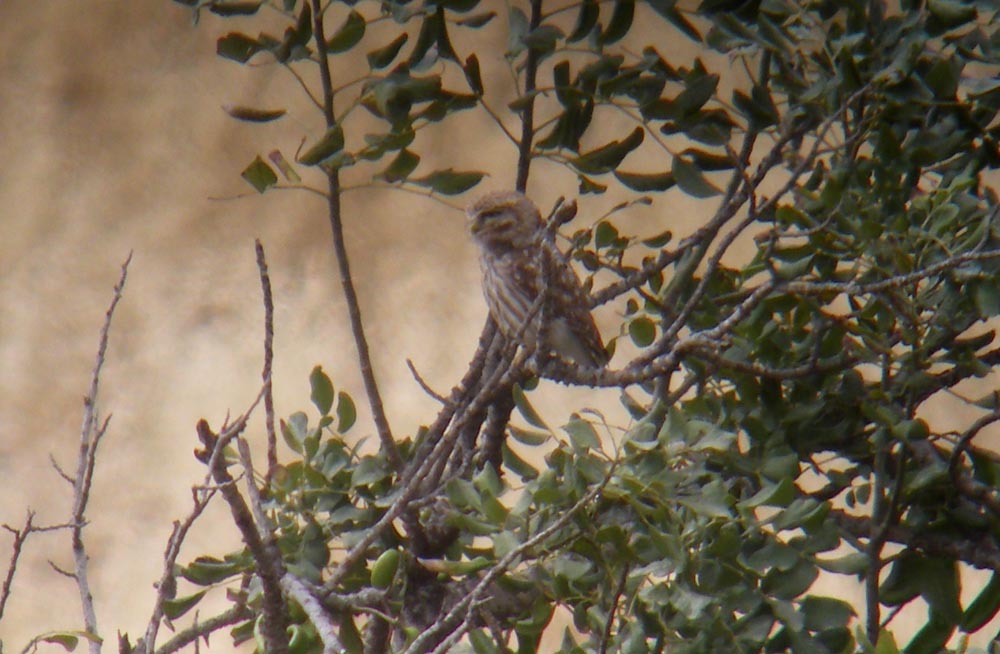
A brief walk around the valley behind the villa produced very little though a Willow Warbler and Garden Warbler were notable. A single male Blackcap moved quickly through the scrub with 2 Roller, 10 Bee-eater and 2 Little Owl also noted. We wound our way up to the top of the Akamas Peninsula this morning, quickly finding the Baths of Aphrodite car park area, connecting with a pair of Roller, Red-rumped Swallow and male Woodchat Shrike en-route (and dodging a few potential head-on collisions along the way!). We headed through the Bath’s of Aphrodite camp site connecting with several Eastern Olivaceous Warbler, 2 Little Owl, several Blackcap, Sardinian Warbler and Cyprus Wheatear and a couple of Cetti’s Warbler along the way.

This was a fantastic area full of potential and must be amazing during the peak of the migrations.


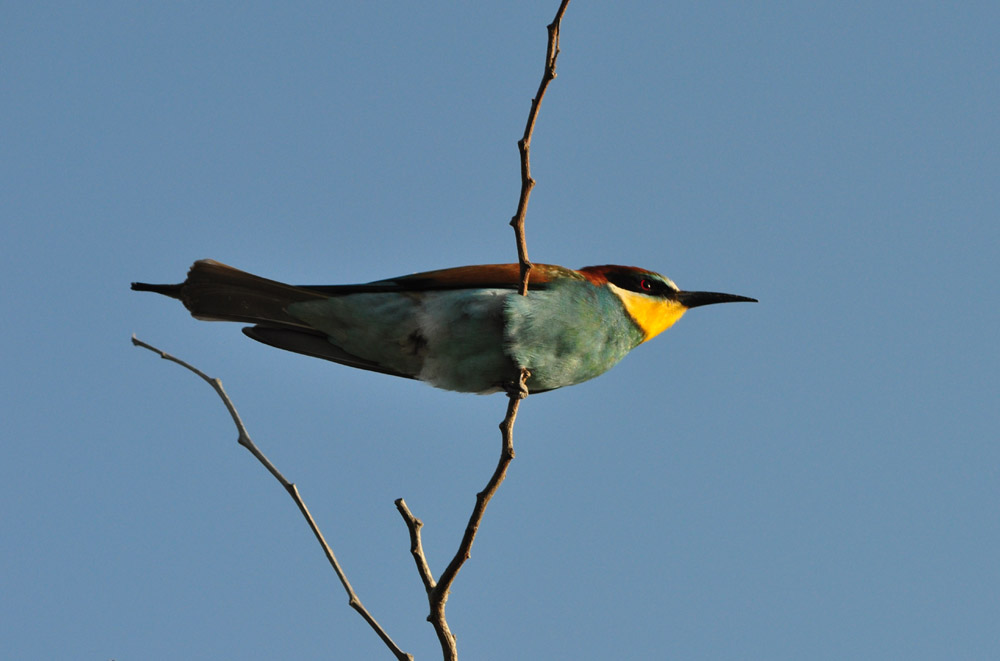
Bee-eater (Mike Bowman)

We continued north and walked for about 3km along the coastal path which was full of birds moving north. Highlights included the visible migration of 4 Honey Buzzard, 1 adult male Red-footed Falcon, 132 Bee-eater and hundreds of Swallows, all giving great views. Passerines moving north along the coastline included a single Wood Warbler, 4 Blackcap, 1 male Serin and 3 Red-backed Shrike (2 male and 1 female). With 3 or 4 more Eastern Olivaceous Warbler singing and dozens of Sardinian Warbler also seen.


Honey Buzzard (Mike Bowman)

Jenny’s parents gripped me off here as they went down a little trail to find a suitable picnic site and ended up photographing the only Tawny Pipit of the trip! I was gutted as it cleared off and flew north before I got there! There was a decent number of Yelllow-legged Gulls offshore, though little else and a small islet was swarming with over 300 Common Swift. Back in the local valley in the evening several new birds were in, including a single Chiffchaff, female Whinchat and a single Spotted Flycatcher but best of all a female Black-headed Bunting which was sat in some weedy growth less than 50m from the villa! Several fledgling Cyprus Wheatear were noted this evening too.

Day 13: 20th May 2011

An early start in the valley but it was again very quiet with only one new migrant in, but it was a decent one – a female (presumably Eastern?) Subalpine Warbler moving north through the scrub along the ridge. There was however very little about and it was fairly hard going.

We went up to the Trodos again and walked the Persephone Trail, en-route in the foothills a brief view (whilst driving) of 2 buzzard-like/sized raptors was frustrating as there was nowhere to pull over to stop and have a look. It was a good 10oC hotter than the previous visit last week which was a good start! There appeared to be fewer birds present than we had seen on the Atalante Trail although there was a great deal of the endemic sub-species of Short-toed Treecreeper activity along the trail with about 10 birds seen well. Chaffinch, Crossbill, Coal Tit and Jay were all plentiful and seen well, a couple of Masked Shrikes gave fleeting views and a Wren was heard. Several singing male Serin showed well to close range and a male Blackbird was found feeding a fledgling – Stagg & Hearl state “Presence in mountains in summer suggests possible breeding” – I guess that breeding has been confirmed since this was published?


Masked Shrike (Mike Bowman)


Short-toed Treecreeper (Mike Bowman)

Highlight here though was the adult male Masked Shrike that we found singing and displaying at very close range. I’d never seen/heard this behaviour before which was fascinating to observe. Mike managed to get a short video clip (will try and uplaod this later) which gives a little bit of an idea of what it was like.

The drive down the Diarizas valley was enjoyable. Scenically this valley is very cool with large vistas over a range of habitats. We found a pullover where we’d stopped on our last visit and had a quick scan and took some landscape shots. The air was full of the sound of a pair of Cretzschmar’s Buntings, a single Red-rumped Swallow cruised up and down past the viewpoint, several Cetti’s Warblers, Blackcaps and Eastern Olivaceous Warblers were singing. A Hoopoe bounded across the valley giving great views before it dropped out of view. Another pair of Masked Shrike appeared in a bush really close by giving more good views of this special species. But then attention focused on a small raptor that appeared over the ridge in front of us, male Lesser Kestrel, fantastic. Unfortunately no concrete views of Long-legged Buzzard though.

Day 14: 21st May 2011

I didn’t get up early this morning as I was tired after previous long day and due to planned late excursion this evening.

We headed over to Lara Beach getting rather lost en-route due to various roads being closed and a distinct lack of signposts to the north of Paphos. Eventually we arrived and parked up north of the Avgas Gorge, about 2km south of Lara Beach Restaurant. We set off walking through the scrubby growth and along the beach. The scenery was fantastic with lots of interesting reptiles and butterflies being seen. Birds were pretty thin on the ground, the highlights included a Great Spotted Cuckoo, lots of Sardinian Warbler, Eastern Olivaceous Warbler, male Cretzschmar’s Bunting and 5 Black Francolin. Crested Lark showed well feeding their young.


Swallowtail (Mike Bowman)


Crested Lark (Mike Bowman)

After a nice lunch which included possibly the best (local style) chips I’ve ever had we continued our walk back through the area. Hummingbird Hawkmoth (Mike Bowman)

In the late afternoon Mike and I went over to the Akrotiri Peninsula to have a look at a variety of sites including Phassouri Reedbeds, Akrotiri Gravel Pits, Bishop’s Pool, Lady’s Mile and Zakaki Marsh area. An interesting variety of birds were seen in the last couple of hours before dark and included very good views of 12 Bee-eater, 1 male and 2 female Red-backed Shrike, 200 Greater Flamingo, 9 Eleonora’s Falcon, 7 Reed Warbler, 12 Ferruginous Duck, 1 male Little Bittern a pair of Eurasian Teal, 15 Kentish Plover, 2 Glossy Ibis and plenty of Squacco Heron and Little Egret.


Bee-eater (Mike Bowman)


Red-backed Shrike (Mike Bowman)


Eleonora's Falcon (Mike Bowman)


Eleonora's Falcon (Mike Bowman)

Day 15: 22nd May 2011

The final day of the holiday saw us relaxing in the vicinity of the villa and nearby beaches of Avdimou and Pissouri. I got up early to have a walk around the valley but it was fairly quiet with 1 Spotted Flycatcher and 2 male Cretzschmar’s Buntings seen and a couple more groups of Bee-eater heard flying through. Highlight this morning however was Lesser Kestrel, or 5 Lesser Kestrel to be precise. They all flew up the valley and kept going, except for 1 adult male that turned and flew back straight towards me at eye level before dropping in the valley below me, giving great views along the way. A single Roller remained on the top and a single Yellow Wagtail flew in-off calling but not stopping.

After a lazy breakfast we had a drive around some of the local villages to enjoy the views for the final time. We then headed down to Avdimou beach where a cliff-top walk produced my first and surprisingly, only Grey Heron of the trip as it flew onto the rocky shore below me. A small flock of 6 Red-rumped Swallow were showing signs of breeding in a drainage pipe under a minor road. A late afternoon trip to the valley didn’t result in much, it was very hot and the wind was increasing again. A single Little Owl was seen and lots of fledgling Great Tit, Greenfinch, Goldfinch, Cyprus Warbler and Cyprus Wheatear were noted too.

As the afternoon turned to evening we headed towards the airport getting the hire car back on fumes! I was not nervous at all. Honest!

We had a great trip and really enjoyed everything this country had to offer. I’ll put together a summary shortly and provide full species list details in due course. I enjoyed this trip so much that I’m already planning a birding trip back over there for spring next year!

Sunday, 29 May 2011

CYPRUS: Day 9, Day 10 and Day 11

Day 9: 16th May 2011

Got up slightly later this morning after a late night trip to the airport to pick up Jenny’s parents after their flight was delayed by two hours.

I started down the valley behind the villa, first up was an adult female Marsh Harrier that flew straight through, presumably this must have arrived yesterday? It flew strongly north. Shortly after a Spotted Flycatcher showed. A bit of movement from the valley bottom caught my attention and I decided to bushwhack down to see what was going on. Sardinian and Cyprus Warblers showed well, then a bush with 3 female Blackcap with more movement in the next bush with 3 male and a female Blackcap, with 2 Garden Warbler and another male Blackcap in a further bush. There may well have been more Blackcap present but it was quite tricky to keep track of them once they started moving about. At the same time an Eastern Olivaceous Warbler started singing then showed incredibly well down to 12ft. Probably my best views of this species. Suddenly a whoosh made me look up as something shot right over my head into the nearby bush. A quick bit of manoeuvring and I was looking at a very smart Lesser Grey Shrike. After watching it for a while it suddenly dropped out of view. Very happy with my haul I decided to try and climb out of the valley, easier said than done! As I climbed up several Turtle Dove were purring away and Cyprus Warbler were busily feeding their young.


'The Valley' looking up

As I neared the track all of the swifts started coming in, Alpine and Common in large numbers with a few obvious Pallids in the mix too. Just as spectacular views as yesterday. I almost didn’t really give them much time as I’d seen them so well yesterday but I’m glad I did because a smaller bird in amongst them caught my attention, it was flying with a totally different jizz and was much smaller – as it then turned to show a white rump – I was looking at a LITTLE SWIFT! I watched the bird for a good 5 minutes as it fed up about 25m up before the flock of swifts it was with moved off over the ridge and out of sight. According to Stagg and Hearl (and the Birdlife information) this is a pretty decent record and will involve a description when I get home!

I was really happy with the mornings birding. Especially with the Shrike and Swift. While we had breakfast an Eleonora’s Falcon shot over the back garden!

We decided to visit the Kourion archaeological site as a gentle introduction to the country for Jan and Mike. It was increasingly hot today with not a huge amount seen the site with the exception of Chukar, Cyprus and Sardinian Warbler and Cyprus Wheatear – still tending to their nests under the walkway. Lots of interesting butterflies and lizards too.


Agama (Mike Bowman)

We positioned ourselves on the cliffs and scanned the long, huge cliffs. An Eleonora’s Falcon flew through but the clear highlight was 2 Griffon Vulture, picked up flying across the cliffs. The Griffon Vulture has been in drastic decline in Cyprus over recent years, a survey this April resulted in only 8 birds being found in the country!

A walk back in the valley in the late afternoon was very quiet unfortunately with the only highlight being 4 Eleonora’s Falcons distantly over Pissouri Bay (you can’t really complain at that though!).

No Golden Oriole seen today, or Bee-eater (though several Bee-eater were heard at Pissouri and Kourion).

Day 10: 17th May 2011

An early start this morning saw me back in the valley behind the villa. The sunrise was fairly spectacular (below). A single Bee-eater filled me with confidence that some new birds were in, however this was short lived as the actual valley was very quiet with just the usual suspects. A pair of pretty ‘good’ looking Rock Dove flew onto the cliffs. I decided to cut across the top and explore the next valley within the valley complex in the hope of something good.


Sunrise


The Sun!

A flock of warblers moved through a set of trees, 1 Garden Warbler, 2 Eastern Olivaceous Warblers and 1 Reed Warbler with a single Spotted Flycatcher also on the move with them. As I cut through some scrub I noticed a bird fly up into a nearby bush, I was then looking at a very smart adult male Red-backed Shrike, my first of the trip. It attracted a lot of attention from the above species with the addition of Cyprus and Spectacled Warbler and a male Blackcap all coming in for a look and scold. After the shrike vanished over the brow of a hill another flock of Bee-eaters, about 25 flew through. Then a singing male Cretzschmar’s Bunting grabbed my attention, after I crept some 50m through the undergrowth it then showed really well on the ground as it fed. Whilst walking back to the villa I had another adult male Red-backed Shrike, at first I assumed this was the same bird but a quick scan from a raised area revealed there was actually 3 males present within 100m2, very impressive! Swift numbers were down on yesterday with no sign of the Little Swift, however 4 very showy Eleonora’s Falcons made up for that!


Male Red-backed Shrike (phone-binned)

We went back for a walk around the Alekhtora area as we did a few days back. The lower levels in the agricultural land contained 2 adult male Red-backed Shrikes and 1 Lesser Grey Shrike, 1 male Eastern Black-eared Wheatear and the top of the plateau contained 4 Kestrel, 4 Eleonora’s Falcons, 1 female Peregrine, 2 Bonelli’s Eagles and 4 Rollers. It was baking hot today, reaching 32.50C. We had a hot but really enjoyable walk enjoying great views of the Eagles as they ranged about the place, and of course the goats got a bit of interest, as too did a couple of snakes. Jan also found a Rollers nest as we were driving down off the hill!

An evening walk back behind the villa was again successful with 5 Red-backed Shrike (3 males and 2 females) seen, along with 57 Bee-eater, 2 Roller, 3 Little Owl, 4 Corn Bunting, a pair of Cretzschmar’s Bunting and a couple of Spotted Flycatcher. Not a bad haul for an hour!

A very enjoyable day which ended on an even better note when a calling Nightjar went past the villa just after dusk.

Day 11: 18th May 2011

After a very windy night with the odd shower and a bit of a dust storm going through I was hoping for some good birds in the valley but it was fairly disappointing with only 1 Red-backed Shrike, an adult male, present, all of the others had gone. I think this is likely to be a ‘new’ bird in as it was in a different area to the ones seen yesterday (and given the overall clearout of birds noted). A huge thunderstorm was starting to kick off about 10km offshore, and it was heading my way! A Little Owl and a Roller were sat out in the open, a couple of Spotted Flycatcher, a single Garden Warbler and a (very frustrating) fly-through unidentified Phylloscopus Warbler were all seen. A male Cretzschmar’s Bunting was sat in a bush singing away. The sound of Bee-eaters filled the air as a flock of 10 flew in-off, the thunderstorm was now getting closer, 5km. The lack of birds, in combination with the rapidly encroaching fork lightning made me decided to head back to the villa for some breakfast. En-route I picked up Corn Bunting and then suddenly a female Common Redstart appeared out of the sky and moved quickly north through the bushes. I quickly got back to the villa just as the thunder and lightning raged directly overhead! For the next hour a huge thunderstorm raged right over the villa before moving off to the northeast.


The Storm!

After the weather started to improve we headed over to Kato Paphos to have another look at the archaeological site – and for me to do some birding around Paphos Headland. It was still fairly cool with the odd shower going through. The headland was covered in shrikes, with at least 12 Red-backed (10 male and 2 female) and a stunning adult male Masked Shrike all seen, and seen well. There was probably more Red-backed about but as the number of tourists increased the shrikes were getting flushed all over the place. Very enjoyable to see all of the shrikes. The Masked Shrike showed very well and was an incredibly smart individual. The rain also dropped 25 Bee-eater that showed down to several feet! Larks were also briskly moving about – both Crested, and Greater Short-toed Lark.


Masked Shrike (phone-binned)


Bee-eater (phone-binned)

As lunch approached we moved into the harbour area to get some refreshments. Whilst here we had a Stone Curlew flew along the shoreline and two White Wagtails flew in-off. A brief walk around the headland path resulted in 4 Cattle Egret and 2 Little Egret flying round the coastline. A flock of 25 Bee-eater flew in-off right overhead, along with several Common Swift. A family of Swallows and their fledglings sat along the security fences and showed well.


Swallows (Mike Bowman)

Back at the villa during the late afternoon and in Pissouri Bay (where we ate tea at a really nice restaurant) Bee-eaters and Eleonora’s Falcons were the main feature with 116 Bee-eater seen coming in-off in several flocks, along with 10 Eleonora’s Falcons hunting them, and the various Hirundines present. In addition, a few Yellow-legged Gulls and a female Peregrine flew through and a Roller showed well at a nest location near the bay. In addition, a Little Owl showed well in the trees behind the back yard of the villa.


Little Owl (Mike Bowman)

Saturday, 28 May 2011

CYPRUS: Day 5 & Day 6

Day 5: 12th May 2011

I woke at 5.30am and made my way into the valley behind the villa. It felt much colder than the previous few days. The first bird recorded was a Bee-eater, and this would be the theme of the day with over 140 birds recorded at all coastal locations visited during the day.

The valley contained far fewer birds this morning (with the exception of 22 Bee-eaters) with only 1 Spotted Flycatcher, 1 female Blackcap, 2 Turtle Dove and a sprinkling of Hirundines. Two dark-phase Eleonora’s Falcons showed incredibly well as they shot across the cliffs. I managed to connect with the ‘lilith’ Little Owl again and this time got good views down to 20m – a very distinctive bird, very pale.

We decided to have a walk around the Kouris Dam today which turned out to be a bit more difficult than planned due to some rubbish signposting around the reservoir (and some new roads not being on my map). The scenery was quite impressive but the highlight was a single adult male Cretzschmar’s Bunting that was feeding in some weedy growth along the edge of a road to the south of the dam wall. The sound of Cetti’s Warblers rang out all around the area.

We then moved on to Kolossi Castle – again quite a smart building in very good condition for its age, looking like it was built to far higher standards than most current builds in the country! A dozen Bee-eaters were feeding in the fields next to the castle while we had lunch just as a shower started to hit.

After lunch we decided to head back to the villa via the Akrotiri Area along the Lady’s Mile route. We stopped at Zakaki Marsh and along Lady’s Mile and added a whole host of new ‘Cyprus Birds’ due to this being the first suitable habitat for them that we’d come across. Highlights included 70 Bee-eater, 8 Ferruginous Duck – including adults and young, 3 Black-winged Stilt, Wood Sandpiper, 5 Temminck’s Stint, Squacco Heron and Cattle and Little Egrets. A single pale-phase (immature-looking) Eleonora’s Falcon was sat on the salt-pan, presumably dropped by the heavy shower that moved through. A single Golden Oriole was also seen here.

We called in briefly to check out Curium Beach where we were treated to another good show by a pale-phase Eleonora’s Falcon, and another flock of 30 Bee-eater with 2 more at nearby Avdimou.


Bee-eater (taken later in week by Mike Bowman)

An evening walk behind the villa was still quiet in regards to migrants – a huge thunderstorm passed through, a Calandra Lark flew over and a flock of c. 50 Pallid Swift came screaming into the valley. Four Golden Orioles were feeding in the valley and showed very well to close range with a pair of Sardinian Warbler also showing well. The second last bird of the day was a pair of Eleonora’s Falcons that showed phenomenally well, a single pale-phased and a single dark-phased bird that were unbelievably close before flying towards the cliffs.

The final bird of the day rather fittingly was a group of 5 Bee-eater that were feeding up. A really good day for this species and very enjoyable to witness.

Day 6: 13th May 2011

I woke slightly later today, not getting started till 6.30am. There were very few migrants around with a single female Blackcap, Garden Warbler and a male Spectacled Warbler and 3 Bee-eaters. A fly-through pale-phase Eleonora’s Falcon was smart. A couple of huge Agama Lizards fighting in the undergrowth flushed several Quail out into view which was slightly unexpected but appreciated!

We decided to head up into the Trodos Mountain for the day so set off around 9.30am. We headed north along some minor roads, as we neared the village of Kissousa an adult Great Spotted Cuckoo flew across the road, along with 4 Bee-eaters and a large flock of Alpine Swift.

As we drove through Pano Platres I noticed an adult Masked Shrike sat on the electric wires, unfortunately I couldn’t stop so had to hope for more later!

We started out on the Atalante Trail – after putting a few extra layers on (the temperature was a barmy 4oC). The familiar sound of Chaffinch greeted us in the car park. The song of the endemic sub species of Coal Tit was ringing out and sounded totally different to those in the UK – and when seen looked totally different too. A couple of Eastern Olivaceous Warbler showed well along with a couple of endemic sub-species of Jay. We then found a couple of Masked Shrike, one showed exceptionally well, allowing views down to about 4feet! A familiar sound and a flash of black then brown alerted me to the presence of a pair of Blackbirds. A large flock of about 50 Crossbills showed incredibly well as they fed on dropped pine cones with a couple of flashy male Serins performing well in the treetops.


Endemic sub-species of Jay (photo Mike Bowman from visit later in the week)


Serin(photo Mike Bowman from visit later in the week)

After lunch we headed onto the Caledonian Falls Nature Trail which was full of the endemic sub-species of Wren which eventually showed well after a while. A couple of Nightingale were heard singing and a couple of the endemic sub-species of Short-toed Treecreeper were heard but unfortunately were not seen. More Coal Tit and Jays were also seen.

The Trodos was an incredible area full of endemic plants. The trails were good and leaflets provided showed the different plants as we walked around which proved a useful identification tool. We will be going back next week so will hopefully try and connect with the Short-toed Treecreeper on that visit.

Driving back to the villa we took the B616 road through the Trodos Foothills and on through the Diarizas Valley – this was a very smart valley scenically and contained some great birds including a cracking adult male Masked Shrike, several Eastern Olivaceous Warblers, Nightingale and Cetti’s Warblers. A very showy pair of Cretzschmar’s Buntings showed very well down to 15 feet – my best ever views of the species to date. I also added Corn Bunting to the country list and had a pair of Roller sat on wires at close range.

Back in Pissouri and a flock of about 30 Bee-eater were moving north around the villa but soon departed.

In the valley in the evening a single Eastern Olivaceous Warbler and Cetti’s Warbler were new in, as was (in all likelihood) 3 Spotted Flycatcher, a Garden Warbler, single Bee-eater and 4 Golden Oriole. A male Sparrowhawk was causing a fair bit of commotion amongst the Cyprus Warblers and Cyprus Wheatears.

Friday, 27 May 2011

CYPRUS Day 3 & Day 4

Day 3: 10th May 2011

I woke early at 5.15am in order to be birding in the local area by first light. I started off at 5.30, it was light but it wasn’t till 6am until the sun came up, at which time the bird activity started to kick off. The numerous migrants present yesterday had gone, save a couple of Spotted Flycatcher. There were however at least 8 Golden Orioles which kept me interested!

Moving along the valley behind the villa Cyprus Warblers were numerous and showed really well at times. Several families with fully fledged young were noted. Suddenly the sky was full of Common and Alpine Swift, some sweeping only feet overhead (see below I managed on my mobile - just!)


Chukar calls were ringing out through the valley. At the trail head an old goat pen seemed busy with Goldfinch and Greenfinch feeding in the weedy growth. A male Blackcap appeared behind me and started calling and then singing, sounding slightly different vocally to those singing at home – possibly a different race? A cracking male Spectacled Warbler showed briefly in some scrub but my eyes were drawn to a pair of Kestrel that were calling in alarm, a quick scan and I was looking at a rather impressive ‘lilith’ Little Owl sat out in the open.

Whilst waiting to see if the owl would come a bit closer my eye was drawn to a bird that flew in and landed in a dead tree in front of me, a male Ortolan Bunting. Unfortunately as soon as the bunting clocked me it dropped down and out of view and was gone. While I waited to see if it would come back into view – which it didn’t, a smart dark-phase Eleonora’s Falcon flew low along the valley edge showing very well.
Time was getting on so I started to head back to the villa for breakfast. Nearing the complex the final 50 yards held a single female Serin, male Eastern Black-eared Wheatear, a very frustratingly brief view of a male Black-headed Bunting, not helped by the presence of a female Sparrowhawk cruising overhead.

After breakfast we drove along the old B6 road to Paphos Headland just randomly stopping for a photo opportunity. This stop produced a large colony of Jackdaw a single Crested Lark, Kestrel and a few more Eleonora’s Falcons.

We arrived at Kato (Old) Paphos/Paphos Headland mid-morning, c10.30am. By this time the temperature was soaring and the number of ‘tourists’ was high. We walked around the harbour, a bit around the headland and then into the Archaeological site. The latter was very impressive and well worth a visit. Whilst walking around looking at the sights I managed a few Yellow-legged gulls, numerous Crested Lark and Fan-tailed Warblers, a single male Red-footed Falcon, a very showy Kestrel – allowing views down to about 2feet!, a couple of Spotted Flycatcher and rather surprisingly a male Northern Wheatear.

We will go back later in the week and try and get there a bit earlier in the day. The mosaics were all very impressive and the site is well worth a visit in its own right.

Late afternoon around the Pissouri Village Area resulted in 4 more Spotted Flycatcher, another male Blackcap, 4 Golden Oriole and a distant Roller, likely to be the same bird seen yesterday.

An evening walk in the valley behind the villa looked good but light was not on my side. A quick bash through some bushes resulted in more families of Cyprus Warblers, a couple of Cyprus Wheatear, several Turtle Dove but best of all 2 Great Reed Warblers – moving through some thorn scrub.

Back at the villa a flock of 18 Bee-eaters noisily flew through heading north. The final bird of the day went to a Golden Oriole that flew into the window of the neighbouring villa. It sat rather dazed on their pergola for at least 5 minutes before it eventually flew off into some olive trees.

Day 4: 11th May 2011

I woke at 5.45 so decided to spend the first hour or so of light in the valley behind the villa again. It started off fairly quietly with several Spotted Flycatchers noted. A female, then a bit later on, a male Whinchat moved up through. A large warbler shot across the trail, Garden Warbler. The lack of swifts was noticeable but the number of Cyprus Warbler seemed much higher – with lots of fledglings about. A couple of Bee-eater were heard in the distance but not seen. A male Sardinian Warbler sang at close range, followed by another Garden Warbler. A ‘singing’ male Chukar showed well as it stood on top of a hillside.

The walk back to the villa produced a singing Hoopoe, after a while the song stopped and the bird suddenly appeared right in front of me as it flew into a nearby bush briefly before continuing on up through the valley. A couple of Golden Oriole moved north through along with getting on for a dozen Turtle Dove.

A fast warble and a bit of movement caught my attention and turned out to be a pair of Spectacled Warbler, the male showed off spectacularly. While watching these a familiar sound was heard, this time it was close – a single Bee-eater, which showed well before flying towards the village.

We decided to visit Lady’s Mile Beach for some sunbathing. En-route we had a cracking Roller and a very showy Chukar. Lady’s Mile was baking hot. As Jenny sunbathed I checked out a patch of dune scrub which was surprisingly busy, predominantly made up of Crested Lark. Two Greater Short-toed Lark were smart. The dune vegetation contained a few Spotted Flycatcher but pride of place went to the Icterine Warbler that showed very well at very close range. As I continued through the dunes a white rump flash caught my attention, when it landed it was clear I was looking at a cracking Isabelline Wheatear. There was also several Linnet, Goldfinch and Greenfinch present.

By mid-morning we moved across to the archaeological site at Kourion, another fine example of a site. A Fan-tailed Warbler showed well here, as too did several pairs of Cyprus Wheatears, including a bird provisioning a nest underneath a walkway and another with fully fledged young. Lots of interesting butterflies and lizards here too and the views from the top of the site were spectacular.

Back at the villa we decided to have an hour back in the valley beyond Pissouri to see if any new migrants had dropped in.

Three Sardinian Warblers were making a noise at the entrance to the valley and several Alpine Swift were circling overhead. A couple of Spotted Flycatcher were noted but no sign of any other chats or warblers. The main star of the show was a group of 10 Bee-eaters that showed incredibly well, down to about 20feet. It was great to watch birds feed as they gradually moved north. The only thing that got me looking away was the 3 dark-phased Eleonora’s Falcons that shot low overhead giving incredible views.


A change in wind direction was noted in the late afternoon with a thunderstorm breaking out. Hoping for a fall tomorrow...